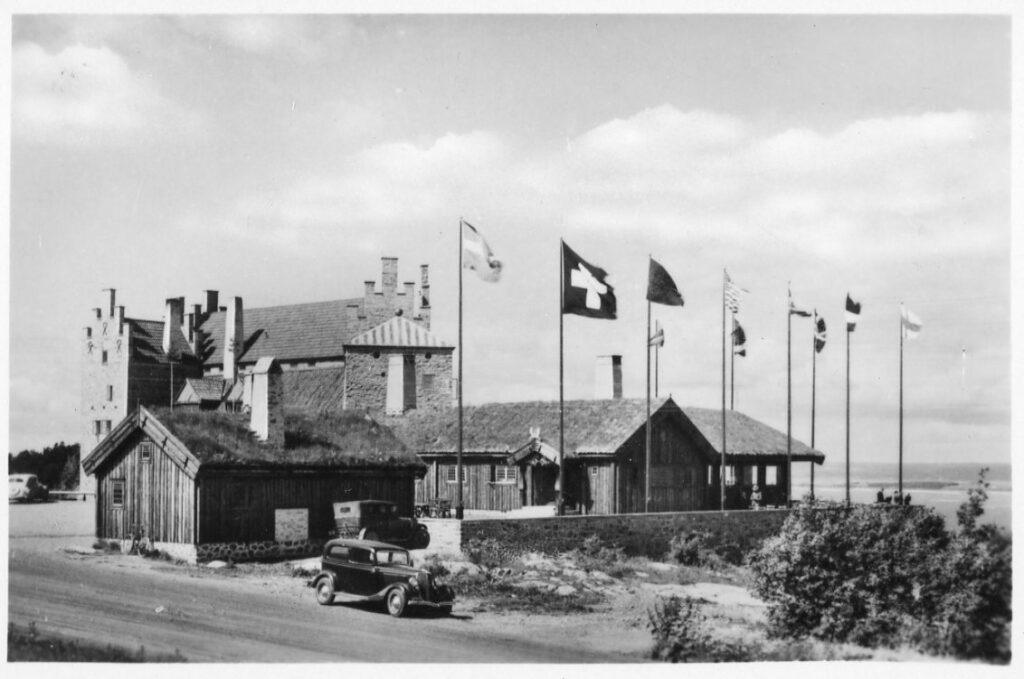
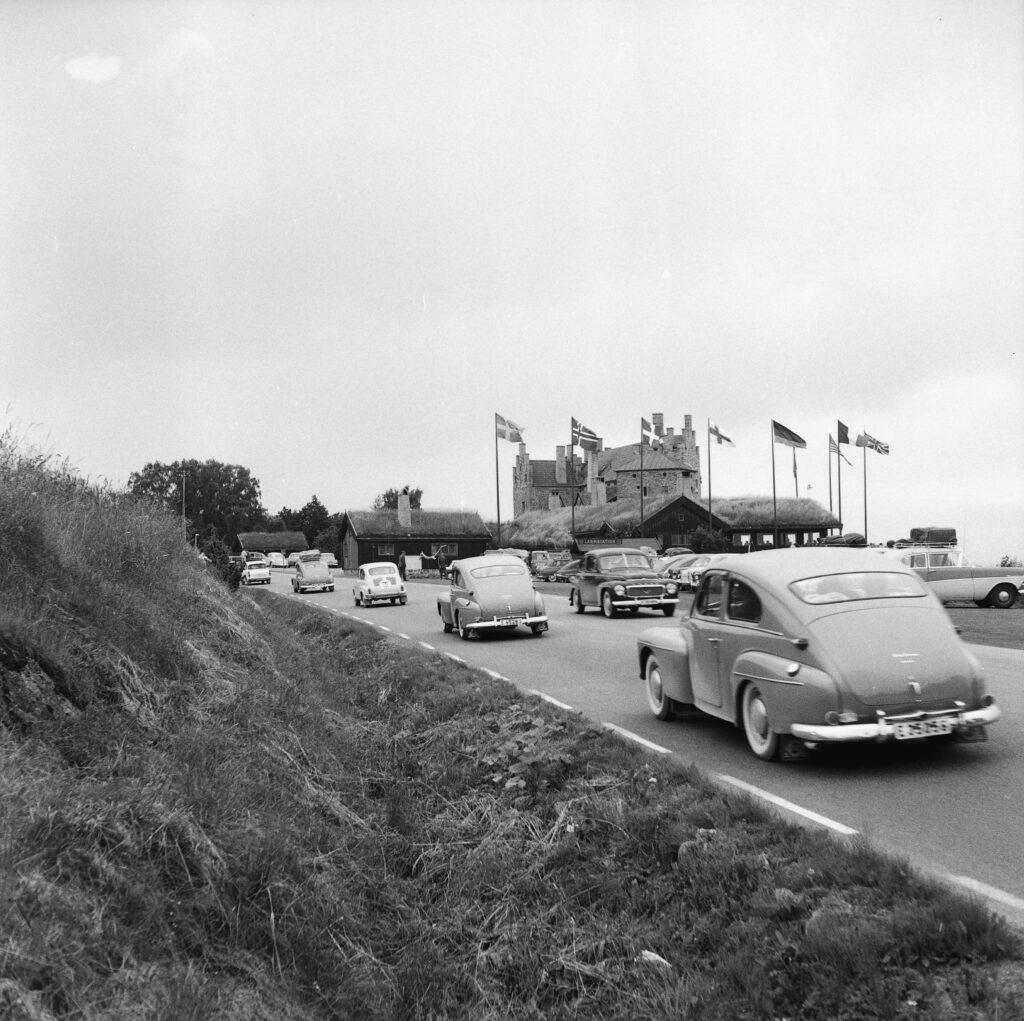
The year is 1930. The Swedish Parliament decides to lift speed limits on roads, and car tourism becomes a concept. This is particularly noticeable in the area around Gränna and on the Gyllensvaan family's estate at Ravelsmarks ängar. Countless travelers on the then national highway between Stockholm and Helsingborg stop and rest at the breathtaking view. Cavalry Captain Gyllensvaan sees the potential early on, and plans for what will become Sweden's first motel and roadside restaurant take shape.
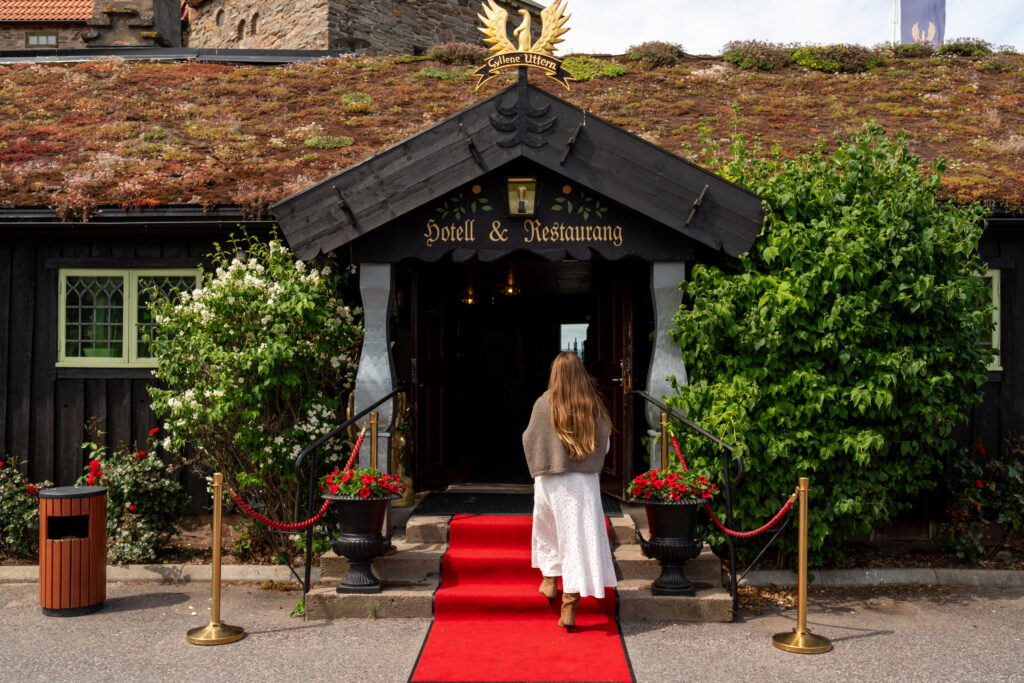
The original idea was to have a gas station and a kiosk, but with the growing number of car tourists, the family soon realized that demand required both coffee service and a dining room. The house was built in the traditional style as a replica of the Bollnäs cottage in the open-air museum and is complemented by five small cottages in the grounds for rent to overnight guests. Gyllene Uttern was inaugurated on Midsummer's Eve in 1933.
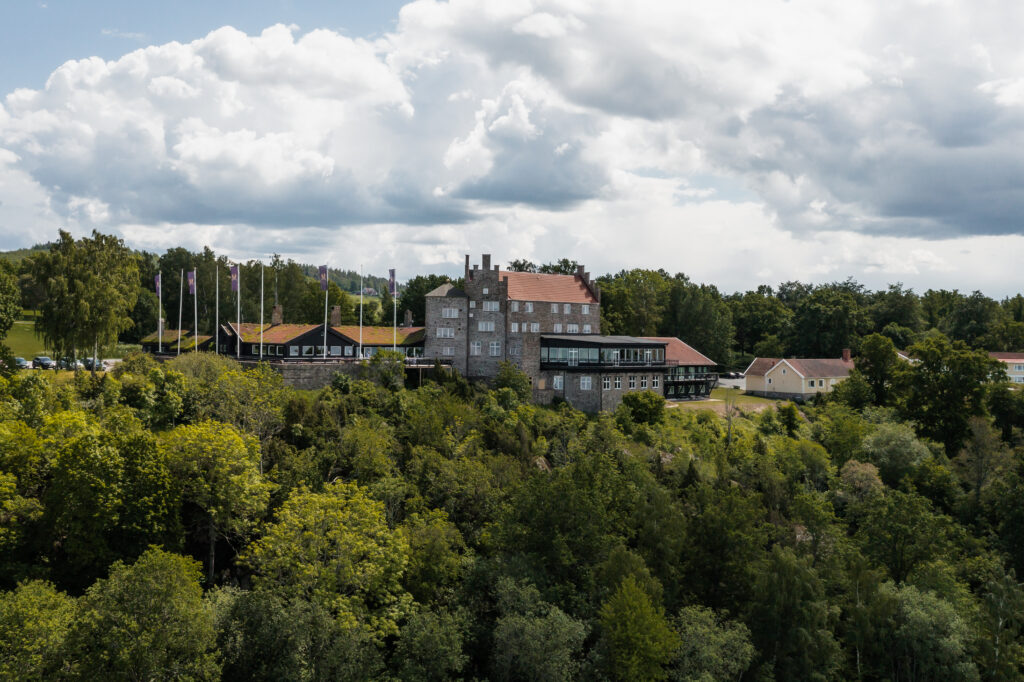
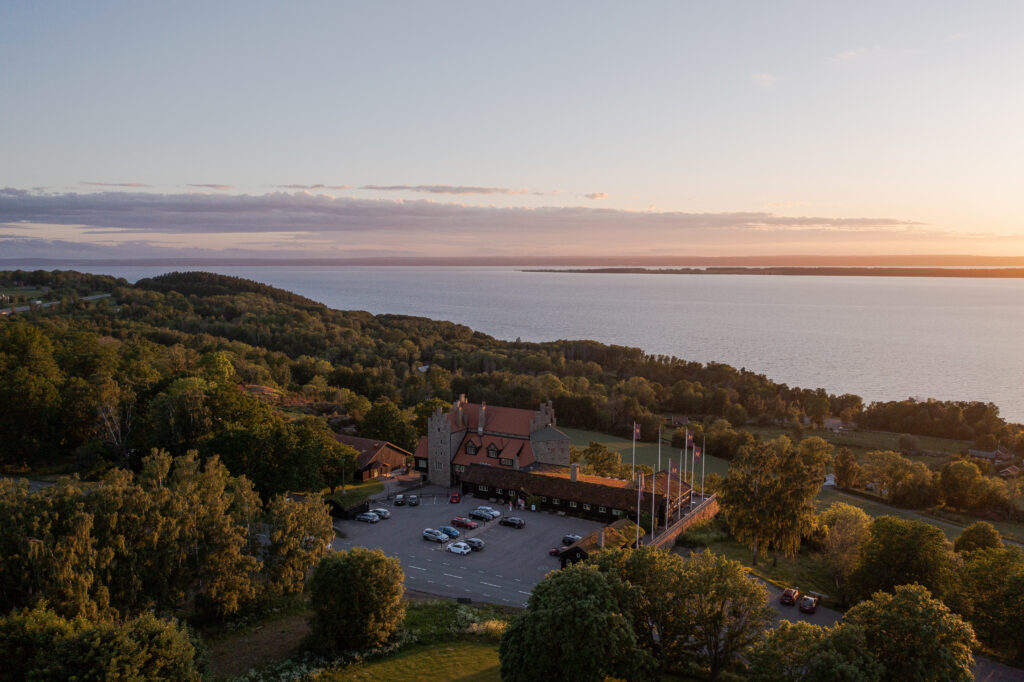
The following year, it was time to expand with dining rooms and hotel rooms in a "sturdy and proper main building." A rustic castle in the form of a ruin was built, inspired by the Visingsborg castle ruins on Visingsö, Bahehus on Grännaberget, and the family's own castle, Västanå, a few kilometers away. This is why parts of the hotel are built in the 17th-century style, while other parts exude a 13th-century feel.
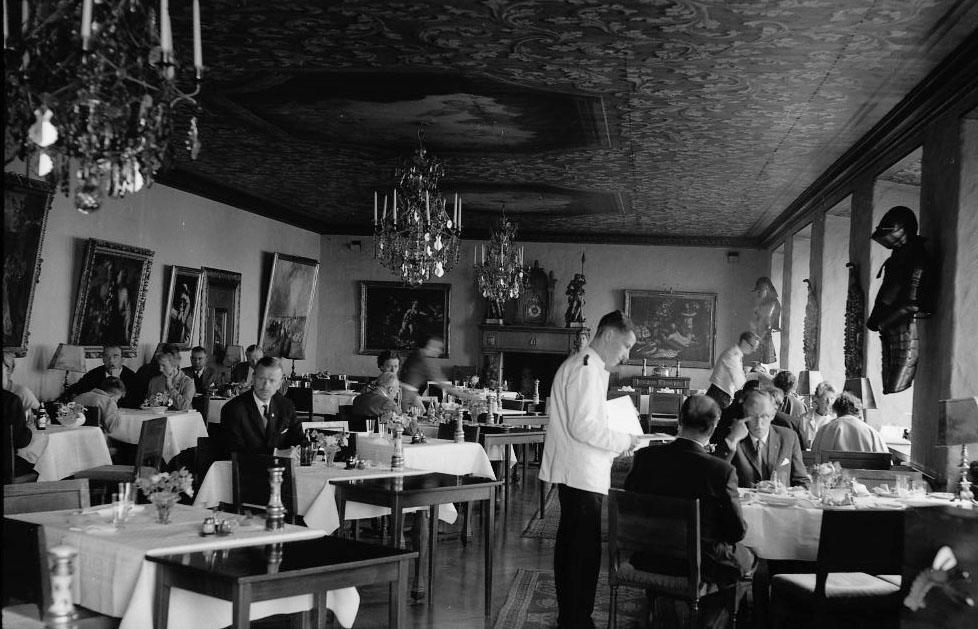
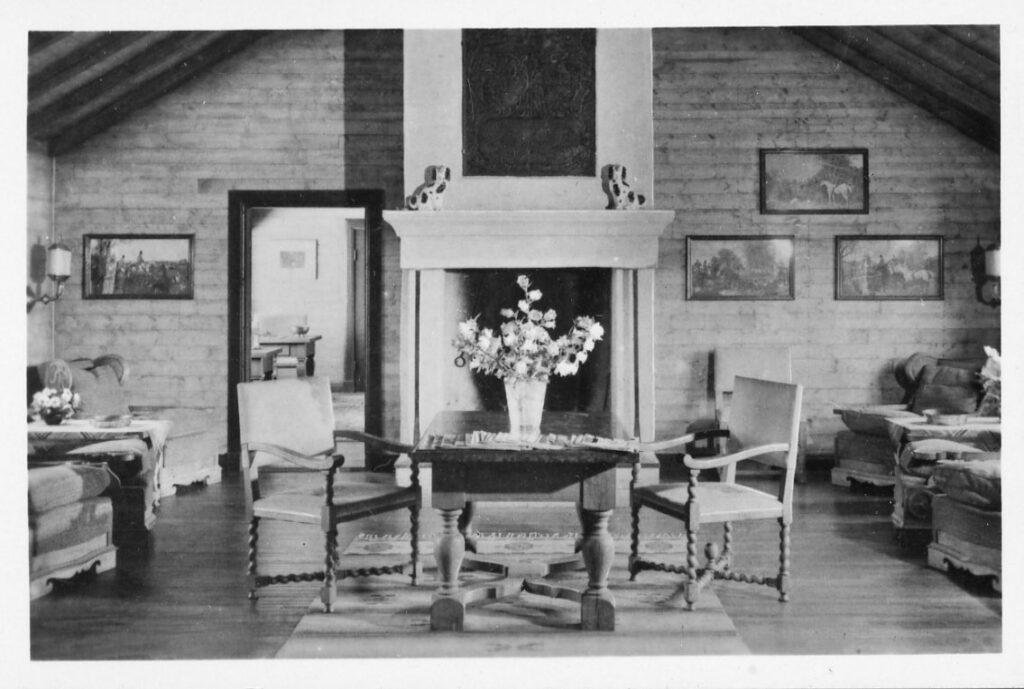
A great deal of work went into the interior design of the castle ruins, which took on the character of a Baroque palace. The ceilings were covered with paintings by Johan Wiberg, inspired by the paintings at Läckö Castle. The walls were covered with hand-painted copies of works by Baroque masters, and the rooms were furnished with period furniture.
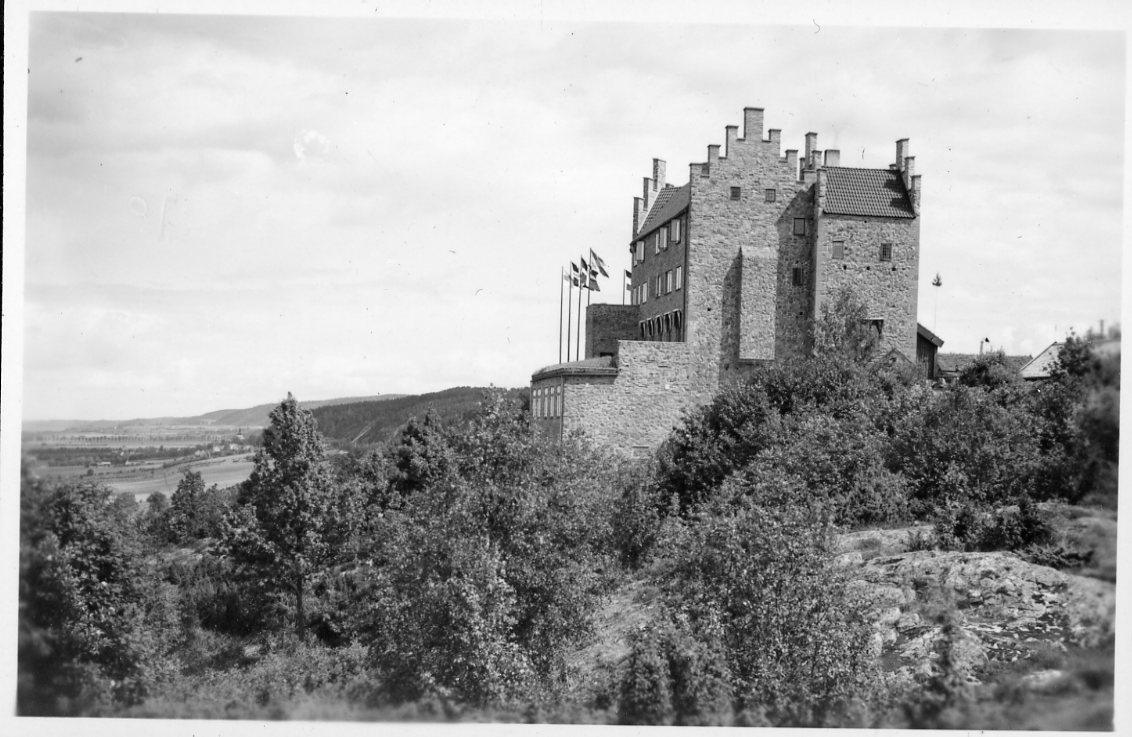
In 1937, the ruin changed its appearance and was transformed into a castle. The main building was then fitted with stepped gables. The builder explained the transformation of the house as follows in Smålands Folkblad on May 15, 1937: "The ruin had the flaw that it seemed a little too original. Now the building fits into the landscape in a different way and does not seem so American in its construction."
The stepped gables were modeled after the pharmacy building in Visby. An additional floor with guest rooms was added to the castle ruins. Another hotel building was constructed, known as the new hotel, which contained only hotel rooms. This is now the Brahe Wing. The number of small cottages now totaled seventeen.
Family continuation and development
In 1957, his son Rolf von Otter took over responsibility for Gyllene Uttern together with his mother Ruth. During this time, the business continued to develop as a hotel and restaurant destination for both long-distance travelers and vacationers. Its strategic location next to the road contributed to Gyllene Uttern becoming a well-known name among motorists, long before the concept of motor hotels became widespread.
This generational experience contributed to the business being able to expand further, while at the same time establishing a tradition of good food and hospitality.
New owner and expansion
In 1970, the von Otter family sold the facility to Svenska Esso AB, which marked the start of a new phase in Gyllene Uttern's history.
During the Esso era, operations continued and the facility became a popular stop for both business travelers and vacationers. Ratos later took over as the management company before the business underwent further changes in the early 1990s.
Private ownership and innovative thinking
1992 saw a clear change when the facility was sold to Scandic, and later that year Wolfgang Zoffel took on the role of new owner. Since then, Gyllene Uttern has been privately owned, with clear German influences, and managed as an independent hotel and restaurant business.
During this period, the historic heritage was preserved while modern services were developed, making Gyllene Uttern a popular destination for conferences, weekend stays, and traditional dinners with a view of Lake Vättern.
Under Josef Darius' leadership – Major investments and expansion
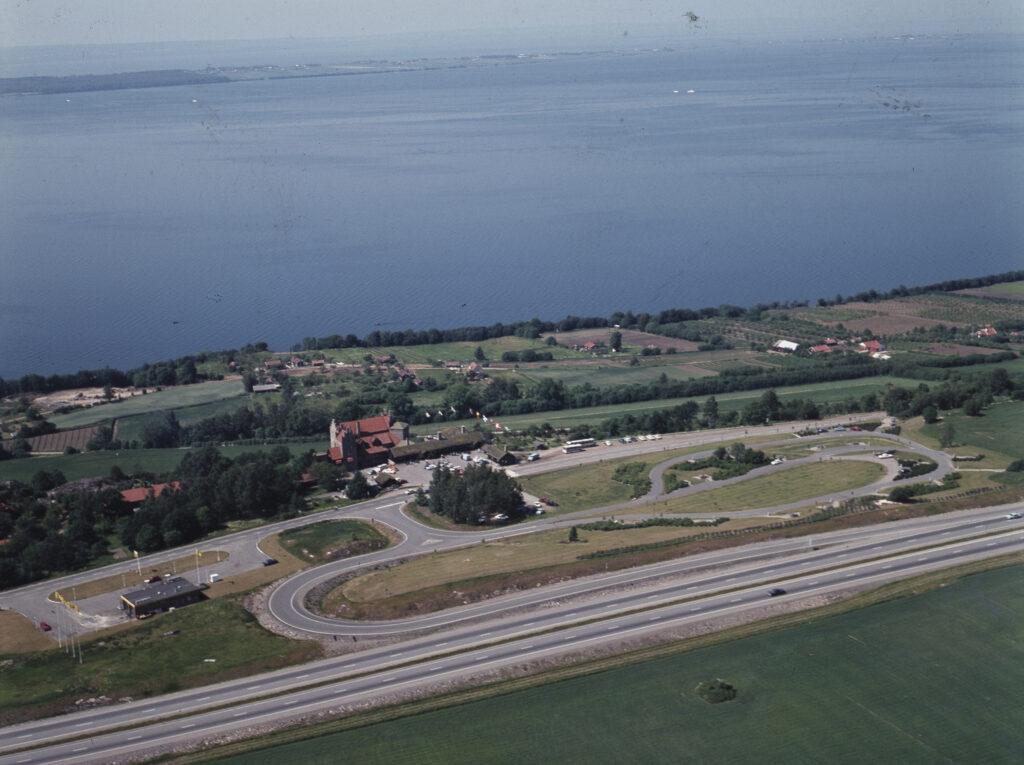
During a period of modernization, with Josef Darius at the helm, new conference areas and a veranda with a terrace and lobby were added. These changes gave the facility a more comprehensive and flexible function for both business and private guests, strengthening Gyllene Uttern's position as a conference and event venue in the region.
New chapter with Jula Holding
In March 2021, the then owner was declared bankrupt as a result of the economic pressure during the coronavirus pandemic, which received considerable attention in local media reports.
Shortly thereafter, it was decided that the business would be revived under Jula Holding, which took over ownership on May 1, 2021.
Following this, Jula has ambitions to rebuild and further develop the classic facility, focusing on both tradition and future experiences for guests.